

In professional communication, especially in writing, the ability to choose the right word can make your message more precise, persuasive, and polished. While “Synonyms for Calm” is a commonly used phrase to describe peaceful or tranquil word alternatives, there are many more articulate and targeted ways to express this idea. This article explores professional alternatives, providing their meanings, examples, use cases, and tone to help elevate your writing.
Understanding the Role of “Calm”
“Calm” is an adjective used to describe a state of tranquility, peace, or absence of agitation or disturbance. For instance:
“She remained calm during the crisis meeting.”
In this sentence, “calm” expresses composure and steadiness.
Expanding Your Vocabulary: Embracing Alternatives to “Calm”
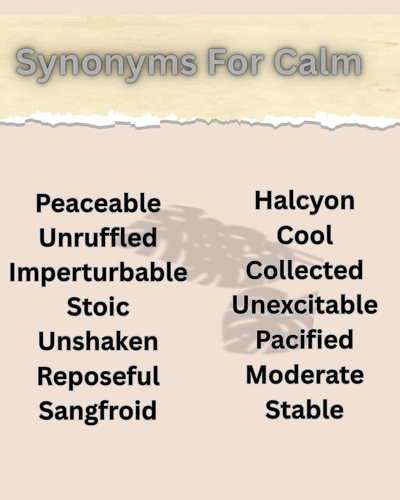
Incorporating a broader range of descriptive language can greatly enhance the richness and effectiveness of your writing. While “calm” effectively conveys tranquility or steadiness, repeated use can lead to monotony. By exploring various Synonyms for Calm, you can bring nuance and precision to your expression.
Synonyms for Calm:
1. Composed
-
Meaning: Having control over one’s emotions; poised.
-
Explanation: “Composed” indicates a deliberate, controlled state of being emotionally steady, often despite challenging circumstances.
-
Definition: Being calm and self-controlled.
-
Example: She remained composed during the intense negotiation.
-
Best Use Case: Use in situations where someone maintains professionalism or emotional control under pressure.
-
Tone: Formal, respectful, confident.
2. Serene
-
Meaning: Peaceful and untroubled.
-
Explanation: “Serene” suggests a deep, almost tranquil calmness, often with an implication of clarity and peacefulness.
-
Definition: Calm, peaceful, and unruffled.
-
Example: His serene demeanor reassured the entire team.
-
Best Use Case: Describing a person, environment, or situation that is calm and free from stress.
-
Tone: Formal, soothing, respectful.
3. Unflappable
-
Meaning: Not easily upset or perturbed; steady.
-
Explanation: Implies a remarkable steadiness even in chaotic or stressful situations.
-
Definition: Having the ability to stay calm and not become confused, especially when things go wrong.
-
Example: Her unflappable attitude helped navigate the crisis smoothly.
-
Best Use Case: Highlighting resilience and steady temperament under pressure.
-
Tone: Professional, admiring, confident.
4. Tranquil
-
Meaning: Free from disturbance or agitation.
-
Explanation: “Tranquil” emphasizes a peaceful calm that is almost serene, often used to describe environments but also moods.
-
Definition: Calm, peaceful, and quiet.
-
Example: The meeting room’s tranquil atmosphere fostered productive discussion.
-
Best Use Case: Describing environments or moods that promote focus and peace.
-
Tone: Formal, peaceful, descriptive.
5. Collected
-
Meaning: Emotionally steady and composed.
-
Explanation: Indicates someone who has gathered their thoughts and emotions, presenting themselves in a controlled way.
-
Definition: Calm and self-controlled.
-
Example: Despite the unexpected question, he stayed collected and provided a thorough answer.
-
Best Use Case: Emphasizing mental and emotional self-control in dynamic or challenging situations.
-
Tone: Formal, reassuring, confident.
6. Level-headed
-
Meaning: Having a calm and sensible approach.
-
Explanation: Suggests practical and rational calmness, often used to describe decision-making or problem-solving abilities.
-
Definition: Calm and sensible, especially in difficult situations.
-
Example: Her level-headed approach helped the team avoid panic during the transition.
-
Best Use Case: Describing someone who handles challenges thoughtfully without overreacting.
-
Tone: Professional, pragmatic, balanced.
7. Peaceful
-
Meaning: Free from disturbance; calm.
-
Explanation: Often used to describe a gentle calm that feels safe and reassuring.
-
Definition: Calm and quiet, free from stress or conflict.
-
Example: We aim to create a peaceful work environment for all employees.
-
Best Use Case: Referring to environments, atmospheres, or mindsets that foster well-being.
-
Tone: Warm, formal, inviting.
8. Unperturbed
-
Meaning: Not worried or disturbed.
-
Explanation: Indicates remaining calm despite potential reasons to be upset or anxious.
-
Definition: Not concerned or troubled.
-
Example: She was unperturbed by the sudden change in project scope.
-
Best Use Case: Describing calmness in the face of unexpected challenges or disruptions.
-
Tone: Formal, confident, assuring.
9. Equanimous
-
Meaning: Having mental calmness and composure, especially under stress.
-
Explanation: A more sophisticated word denoting balanced and steady emotional state.
-
Definition: Calm and even-tempered, especially in difficult situations.
-
Example: His equanimous nature made him an effective leader during crises.
-
Best Use Case: Ideal in leadership or personal qualities discussions, especially in formal communication.
-
Tone: Formal, intellectual, respectful.
10. Placid
-
Meaning: Not easily upset or excited; peaceful.
-
Explanation: Suggests a gentle and consistent calmness, often used for personality or settings.
-
Definition: Calm and peaceful with little movement or activity.
-
Example: Her placid temperament made her well-suited for the customer service role.
-
Best Use Case: Describing stable, gentle calmness in personality or atmosphere.
-
Tone: Formal, gentle, descriptive.
Choosing the Right Alternative Synonyms for Calm
The choice of synonyms for calm depends on the context and specific nuance you wish to convey. For example, use “composed” or “cool-headed” to describe people in stressful situations, “serene” or “tranquil” for peaceful environments, and “placid” or “even-tempered” for personality traits. Matching the synonym to your intent ensures clarity and relevance.
Conclusion
Expanding your vocabulary with synonyms for calm allows you to communicate tranquility, composure, or peacefulness with precision and variation. Whether you’re drafting a report, giving feedback, or describing personal traits, selecting the right word can elevate the impact and professionalism of your message.
