

In professional communication, especially in writing, the ability to choose the right word can make your message more precise, persuasive, and polished. While “Strong Synonyms” is a commonly used phrase to describe impactful or powerful word alternatives, there are many more articulate and targeted ways to express this idea. This article explores professional alternatives, providing their meanings, examples, use cases, and tone to help elevate your writing.
Understanding the Role of “Strong”
“Strong” is an adjective used to describe something or someone with great physical power, emotional resilience, or intensity. For instance:
“She gave a strong performance in the final presentation.”
In this sentence, “strong” expresses high quality or impact.
Expanding Your Vocabulary: Embracing Alternatives to “Strong”
Strong Synonyms
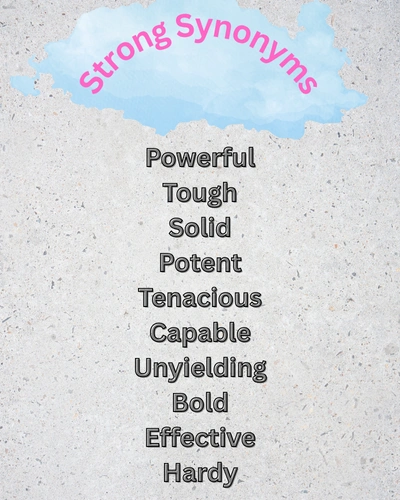
Incorporating a broader range of descriptive language can greatly enhance the richness and effectiveness of your writing. While “strong” effectively conveys intensity or power, repeated use can lead to monotony. By exploring various Strong Synonyms, you can bring nuance and precision to your expression.
Synonyms for Strong:
1. Robust
-
Definition: Effective and able to perform well under a wide range of conditions.
-
Explanation: Often used to describe systems, strategies, or arguments that are solid and resilient.
-
Example: “We developed a robust cybersecurity framework to protect client data.”
-
Best Use Case: Describing systems, frameworks, or methodologies.
-
Tone: Confident, technical, reliable.
2. Resilient
-
Definition: Able to recover quickly from difficulties or adapt to change.
-
Explanation: Highlights emotional, structural, or strategic strength under stress.
-
Example: “Her resilient leadership helped the team navigate market challenges.”
-
Best Use Case: Leadership, team performance, emotional or organizational adaptability.
-
Tone: Inspirational, empathetic, affirmative.
3. Effective
-
Definition: Successful in producing a desired or intended result.
-
Explanation: Focuses on the outcome rather than the force or intensity.
-
Example: “Our marketing campaign proved highly effective in driving conversions.”
-
Best Use Case: Strategies, processes, presentations, or campaigns.
-
Tone: Results-oriented, pragmatic.
4. Vigorous
-
Definition: Characterized by forceful energy or intensity.
-
Explanation: Emphasizes dynamism and vitality—often used in action-driven contexts.
-
Example: “The team launched a vigorous effort to meet the tight deadline.”
-
Best Use Case: Team efforts, initiatives, or debates.
-
Tone: Energetic, assertive.
5. Compelling
-
Definition: Evoking interest, attention, or admiration in a powerfully irresistible way.
-
Explanation: Strong in appeal or persuasiveness, often used with arguments or presentations.
-
Example: “She presented a compelling case for expanding into new markets.”
-
Best Use Case: Presentations, proposals, ideas.
-
Tone: Persuasive, articulate, influential.
6. Credible
-
Definition: Believable and trustworthy.
-
Explanation: Suggests a foundation built on evidence, reliability, and expertise.
-
Example: “The report provides credible evidence to support our proposal.”
-
Best Use Case: Research, data, reports, or proposals.
-
Tone: Trustworthy, professional, measured.
7. Formidable
-
Definition: Inspiring respect or fear due to power, intensity, or capability.
-
Explanation: Conveys strength with an element of awe or dominance.
-
Example: “She is a formidable negotiator with years of international experience.”
-
Best Use Case: Individuals with significant influence or expertise.
-
Tone: Powerful, admiring, slightly dramatic.
8. Well-Founded
-
Definition: Based on good reasoning, facts, or evidence.
-
Explanation: Suggests logical strength rather than emotional or physical power.
-
Example: “His concerns are well-founded and merit further discussion.”
-
Best Use Case: Arguments, concerns, or recommendations.
-
Tone: Rational, respectful.
9. Influential
-
Definition: Having the power to change or affect someone or something.
-
Explanation: Emphasizes impact through leadership, ideas, or reputation.
-
Example: “Her influential guidance shaped the direction of the entire project.”
-
Best Use Case: Leadership, mentorship, strategic decisions.
-
Tone: Respectful, high-impact, thoughtful.
10. High-Performing
-
Definition: Consistently achieving above-average results.
-
Explanation: Focuses on measurable success and sustained excellence.
-
Example: “He is a high-performing analyst who exceeds quarterly targets.”
-
Best Use Case: Performance reviews, team or employee recognition.
-
Tone: Positive, appreciative, data-driven.
Choosing the Right Alternative Strong Synonyms
The choice of strong synonyms depends on the context and specific nuance you wish to convey. For example, use “resilient” or “tenacious” to describe people, “robust” for systems, and “durable” for materials or objects. Matching the synonym to your intent ensures clarity and relevance.
Conclusion
Expanding your vocabulary with strong synonyms allows you to communicate power, endurance, or effectiveness with precision and variation. Whether you’re drafting a report, giving feedback, or describing personal traits, selecting the right word can elevate the impact and professionalism of your message.
Using rich synonyms for strong and synonyms for love adds power and emotion to your writing. These alternatives enhance clarity, evoke deeper feelings, and make your message more compelling. Whether for creative or professional use, the right words elevate your expression and leave a lasting impact on your audience.
