

People turn to the word pistanthrophobia when ordinary language feels too small to describe the weight of past hurt. The term captures an emotional freeze the uneasy pause before trusting someone again, even when the heart quietly hopes for safety. Its complexity lies not in the spelling but in the experience it represents, and that’s why so many search for the pistanthrophobia meaning. Understanding this word means stepping into the layered world of trust, language, and human vulnerability. With the right context, pronunciation, and usage notes, the term becomes easier to grasp and far more relatable than it first appears.
A Grammatical Overview: Pistanthrophobia Meaning
Pistanthrophobia Definition (noun):
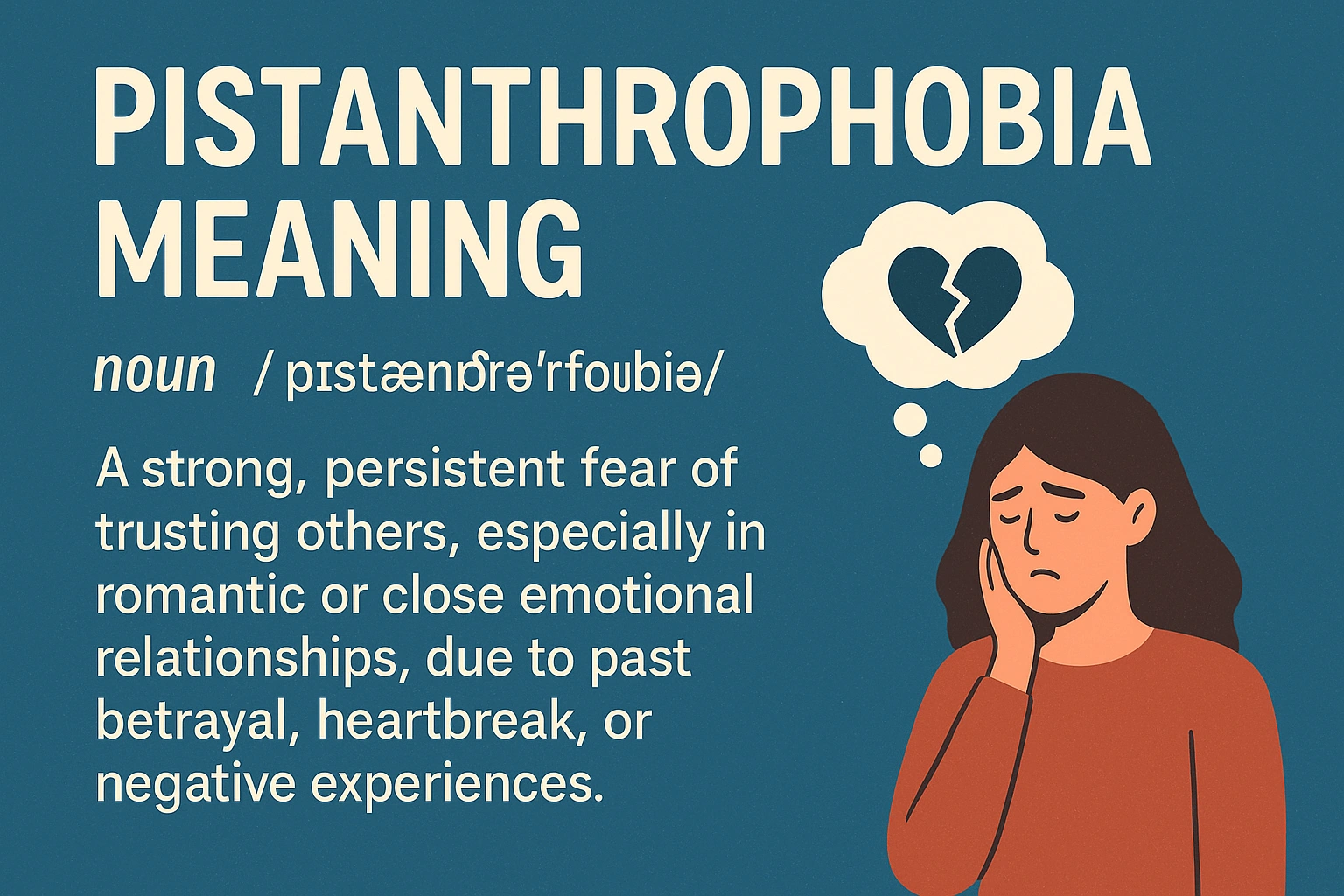
A strong, persistent fear of trusting others, especially in romantic or close emotional relationships, due to past betrayal, heartbreak, or negative experiences.
-
What is pistanthrophobia?
It refers to fear of trusting people because of past emotional wounds. -
Pistanthrophobia person:
Someone who struggles to let others in or depend on them emotionally.
Part of Speech:
Noun
Pistanthrophobia Pronunciation:
-
Phonetic: pis-tan-thro-fo-bee-uh
-
IPA: /ˌpɪstænθrəˈfoʊbiə/
Origin & Etymology
Pistanthrophobia is formed from Greek roots:
-
pistis — “trust”
-
anthropos — “human”
-
phobia — “fear”
Although it mirrors the classical structure of psychological terms, it is modern and unofficial, gaining popularity through online discussions about emotional wellbeing and relationship fears. Its rise can be traced to social media and self-help conversations in the late 2010s.
Detailed Usage
The term pistanthrophobia meaning is often applied in emotional, psychological, and relational contexts. While not used in academic psychology, it appears widely in blogs, counseling forums, and social spaces online.
Common Contexts of Use
-
Romantic relationships: fear of dating again after betrayal.
-
Friendships: reluctance to rely on new people.
-
Family dynamics: keeping guarded due to past hurt.
-
Online conversations: describing hesitation in forming new bonds.
-
Self-expression: identifying emotional patterns (“I think I have pistanthrophobia”).
Grammar Notes
-
Used as a singular, uncountable noun.
-
Correct: She struggles with pistanthrophobia.
-
Incorrect: She has two pistanthrophobias.
-
-
Often appears with words like:
deal with, struggle with, face, experience, overcome, signs of, symptoms of, treatment for.
Helpful Collocations
-
mild pistanthrophobia
-
deep pistanthrophobia
-
pistanthrophobia symptoms
-
pistanthrophobia test (informal quizzes)
-
pistanthrophobia treatment approaches
-
pistanthrophobia meaning in relationships
Pistanthrophobia Synonyms & Antonyms
Pistanthrophobia Synonyms
| Word | Meaning |
|---|---|
| Mistrust | General lack of trust in others |
| Distrust | Belief that someone is unreliable |
| Commitment-phobia | Fear of long-term emotional commitment |
| Social withdrawal | Avoiding closeness due to fear |
| Cynicism (emotional) | Expecting the worst from others |
Pistanthrophobia Antonyms
| Word | Meaning |
|---|---|
| Trust | Confidence in someone’s intentions |
| Openness | Willingness to share thoughts and feelings |
| Security | Emotional stability with others |
| Assurance | Comfort in someone’s reliability |
| Confidence | Belief in positive outcomes in relationships |
Also Read: Wailer Definition
Example Sentences
-
Her pistanthrophobia kept her from starting new relationships even though she wanted affection.
-
Many people search the internet for pistanthrophobia meaning after a painful breakup.
-
He mistook his caution for pistanthrophobia, but it was simply lack of compatibility.
-
A therapist explained that avoiding trust conversations may deepen one’s pistanthrophobia.
-
Friends supported him patiently as he worked through his pistanthrophobia symptoms.
-
Some take online pistanthrophobia tests to reflect on their trust issues.
-
Her journal entries showed slow progress toward overcoming pistanthrophobia.
Common Mistakes & Tips
Spelling Errors
-
Incorrect: pistanthophobia, pistantrophobia, pistonthrophobia
-
Tip: Break it into chunks—pistis + anthro + phobia.
Meaning Mistakes
-
Mistaking it for fear of people (that’s anthropophobia).
-
Assuming it is a recognized medical disorder (it is informal and descriptive).
Grammar Mistakes
-
Using it as an adjective.
-
Incorrect: She is very pistanthrophobia.
-
Correct: She has pistanthrophobia.
-
Cultural & Contextual Insight
-
This term grew in popularity through social media platforms, therapy-inspired online communities, and modern relationship discussions.
-
Influencers, relationship coaches, and content creators often mention it to describe emotional caution, making the word feel relatable to younger audiences.
-
It functions both as a self-label and a conversation tool, helping people articulate complex feelings.
Regional Meanings
These are not formal dictionary translations but commonly used contextual explanations:
-
Pistanthrophobia meaning in Hindi: विश्वास करने का डर, खासकर रिश्तों में पिछले अनुभवों के कारण।
-
Pistanthrophobia meaning in Telugu: గత నిరాశల వల్ల ఇతరులను నమ్మడానికి భయం.
-
Pistanthrophobia meaning in Tamil: முன்னாள் வேதனைகளால் மற்றவர்களை நம்புவதற்கு பயம்.
-
Pistanthrophobia meaning in Urdu: ماضی کی تکلیف کی وجہ سے دوسروں پر بھروسہ کرنے کا خوف۔
These reflect cultural ways people describe emotional hesitation.
Tips to Remember the Word
-
Think of “pistis = trust” and “phobia = fear.”
-
Associate it with “trust issues after trauma.”
-
Visual memory trick:
PIS-TAN-THRO-PHO-BIA (say it slowly like a rhythm).
Related Words / Word Families
-
Phobia: fear
-
Anthropology: study of humans
-
Pistic: relating to faith or trust (rare)
-
Attachment styles: secure, anxious, avoidant
Reader Interaction / Social Hook
Have you ever hesitated to trust someone because of past hurt? If yes, you’ve already felt the emotional territory this word describes. Many readers share similar experiences, which is why searches for pistanthrophobia meaning keep rising.
Related Expressions / Slang Evolution
-
“Trust issues” — common informal phrase
-
“Guarded heart” — poetic expression
-
“Emotional walls” — metaphor for self-protection
-
“Soft ghosting” — avoiding closeness due to fear
These terms overlap with the concept of pistanthrophobia without replacing it.
Conclusion
The word Pistanthrophobia gives language to a feeling many recognize but seldom name. It blends trust, history, and emotional caution into a single term that resonates across personal stories and cultural backgrounds. With pistanthrophobia meaning, roots, and usage now clear, the word becomes a practical and expressive addition to everyday communication. Whether describing a personal journey or interpreting someone else’s emotional distance, this term offers a precise way to speak about trust after pain. Use it with confidence, intention, and clarity whenever the context calls for it.
FAQ Section
1. Is pistanthrophobia a medical term?
No. It is not a clinical diagnosis but a descriptive, modern word used in emotional and relationship contexts.
2. Can a pistanthrophobia test diagnose anything?
Online tests are informal self-reflection tools, not medical assessments.
3. What causes pistanthrophobia?
Often linked to painful past relationships, betrayal, abandonment, or long-term emotional stress.
4. What is pistanthrophobia treatment?
People often discuss therapy, communication practice, journaling, and gradual trust-building as supportive approaches.
5. Is the word formal or informal?
It is informal, emotional, and common in digital conversation and self-help communities.
