
The Caribbean Premier League (CPL) stands alone in the world of T20 cricket. Other leagues may boast bigger budgets, more global stars, or larger stadiums, but no tournament matches the CPL’s raw, rhythmic, and fearless power hitting culture. In the Caribbean, big hitting is not a skill to be added it is a way of playing, a way of expressing identity. The CPL amplifies this spirit and turns it into a spectacle that influences leagues across the world.
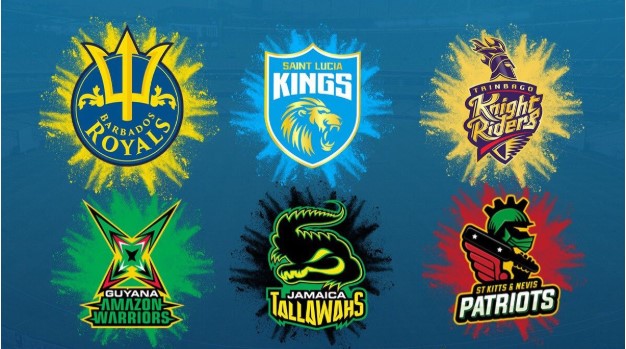
Over the years, CPL franchises have developed their own styles of power hitting. While all six teams embrace aggression, each franchise molds and refines their hitters differently, shaped by home conditions, team history, coaching direction, and local cricketing roots. The result is a league where six hitting is not merely encouraged; it is engineered.
This article explores how CPL teams cultivate unique hitting cultures, how they discover and polish big hitters, and how this distinctive approach influences modern T20 cricket globally.
Why the Caribbean’s Cricketing DNA Makes CPL Power Hitting Special?
Before analyzing franchise approaches, it’s important to understand why the CPL produces a different kind of hitter. Caribbean cricket has always celebrated audacity Viv Richards, Chris Gayle, Brian Lara, Kieron Pollard, and Andre Russell symbolized a fearless swing of the bat, a refusal to be contained. This mindset trickles down through local cricket, school competitions, and beach cricket, where constraints are minimal and freedom is abundant.
Young cricketers grow up valuing:
- Clean hitting over technical conservatism
- Elevation and timing rather than nudges and placement
- The thrill of clearing boundaries instead of rotating strike
When these instincts meet modern strength training, analysis tools, and global coaching expertise inside the CPL, they form a melting pot that produces the most explosive power hitters on earth.
Trinbago Knight Riders – Structured Power Hitting Backed by Tactical Intelligence
Among CPL teams, Trinbago Knight Riders (TKR) represent the most polished and system driven hitting culture. Their philosophy blends Caribbean flair with Kolkata Knight Riders’ analytical approach from the IPL. TKR hitters often prepare deeper than others simulation work, data backed boundary zones, and personalized attacking plans.
This has shaped hitters such as:
- Colin Munro, whose controlled aggression thrives under well defined roles
- Kieron Pollard, a natural giant of power hitting refined through tactical discipline
- Nicholas Pooran, who blends deft touch with relentless six hitting efficiency
TKR hitters rarely swing blindly. Their attacking play has purpose matchups, specific bowlers, specific overs. The franchise trains hitters to recognize when to go hard and when to reset, creating a culture where power is married to decision making.
TKR’s approach has made them the CPL’s most balanced hitting unit: explosive yet methodical, emotional yet strategic.
Jamaica Tallawahs – Raw Muscle, Natural Flair, and Rebel Energy
The Jamaica Tallawahs embody raw Caribbean hitting energy more than any other CPL franchise. Their power hitting culture is built on instinct rather than structure. Tallawahs hitters often play with expressive freedom, trusting their natural ability to overpower bowlers.
This is the team that launched:
- Chris Gayle’s iconic CPL seasons
- Andre Russell’s match winning finishing bursts
- Rovman Powell’s evolution into a world class T20 hitter
The Tallawahs encourage physical strength, back foot dominance, and lofted hitting straight down the ground. Their training sessions often resemble controlled chaos hit long, hit hard, hit again. Coaches give players creative license because confidence, not restriction, fuels these hitters.
Their philosophy can be summarized simply:
If you can clear the rope, do it repeatedly.
This rebellious, unfiltered power hitting identity makes the Tallawahs unpredictable but capable of breathtaking peaks.
Barbados Royals – Timing Based Hitting and Smart Acceleration
Barbados Royals formerly Barbados Tridents represent a different style of power hitting. Their hitters often rely on timing, elegance, and selective acceleration rather than brute force. This reflects the island’s cricket culture, which historically values fluency and placement.
Their standout hitters include:
- Jason Holder, whose long lever hitting blends rhythm with clean swings
- Kyle Mayers, capable of towering sixes generated from timing
- Rahkeem Cornwall, a massive striker whose bat swing remains surprisingly simple
The Royals coach hitters to pace innings intelligently. They foster batters who can start slow, absorb pressure, then release explosiveness during death overs. This “smart power” makes their style effective even on slower Caribbean pitches.
Unlike the Tallawahs, Royals hitters treat power hitting as a phase, not a constant. Their approach is calculated, making them one of CPL’s most tactically flexible batting units.
Guyana Amazon Warriors – Spin Hitting Dominance and Innovation
Guyana’s home conditions produce slower pitches, challenging for power hitters but perfect for developing specialists against spin. Over time, Guyana Amazon Warriors have become CPL’s best team at hitting spin bowling for power.
Their standout hitters Shimron Hetmyer, Sherfane Rutherford, and Keemo Paul thrive in middle overs acceleration. Their swing paths, footwork, and boundary zones are trained specifically to counter spin on sluggish tracks.
The Warriors emphasize:
- Hitting with angles
- Sweeping variations
- Maintaining momentum through rotation before unleashing power
- Attacking spinners in defined overs
Their power hitting is not about clearing 100 meter boundaries but about manipulating fields and maximizing strike rates on difficult surfaces.
Guyana’s influence is global: around the world, teams now seek batters who specialize in striking spin something the Amazon Warriors have long prioritized.
St. Lucia Kings – Innovation and High Intent Powerplay Hitting
St. Lucia Kings are a franchise that values high intent batting from ball one. Their approach focuses heavily on powerplay hitting, inspired by modern T20 trends where early aggression determines match pace.
Kings hitters such as:
- Johnson Charles, a fearless opener
- Andre Fletcher, an aggressive enforcer
- Faf du Plessis (during his stint), who shaped a systematic early hitting model
thrive in structures that encourage fast starts.
The Kings train hitters to:
- Attack seamers early
- Score through the arc between midwicket and long off
- Use powerplay field restrictions ruthlessly
Their hitting culture is built for momentum. Whether defending or chasing, the Kings seek control through early boundary bursts. Their philosophy is forward driven a deliberate attempt to set or disrupt the tempo early.
St. Kitts and Nevis Patriots – Finisher Focused, Lower Order Power Hitting Culture
The Patriots have a long standing identity built around powerful finishers. Their squads often feature big hitting all rounders capable of scoring 30 off 10 at the death a skill essential in CPL conditions.
Key examples include:
- Evin Lewis, who alternates between opener and late order accelerator
- Dwayne Bravo, a master of end overs finishing
- Fabian Allen, one of the Caribbean’s most dynamic lower order hitters
The Patriots’ strategy prioritizes:
- Depth of boundary hitters
- Flexible batting positions
- Late innings matchups
Rather than relying on a dominant top order, the Patriots load their back end with firepower, reflecting their belief that CPL games are often won in overs 16–20.
Comparing Power Hitting Philosophies Across the CPL:
| Franchise | Power Hitting Characteristics | Signature Strength |
| Trinbago Knight Riders | Structured, matchup based, analytical | Tactical finishing and controlled aggression |
| Jamaica Tallawahs | Raw power, instinctive swings, fearless intent | Game changing peaks of six hitting |
| Barbados Royals | Timing heavy, selective acceleration | Smart power across phases |
| Guyana Amazon Warriors | Spin hitting specialization | Middle overs acceleration |
| St. Lucia Kings | Early aggression, powerplay domination | Fast starts that set match tone |
| St. Kitts & Nevis Patriots | Lower order depth and finishing | High impact death overs hitting |
This strategic diversity is why CPL’s batting ecosystem feels so dynamic. Different philosophies enrich competition and sharpen hitters who move on to leagues like IPL, PSL, and SA20.
How CPL Power Hitting Influences Global T20 Cricket?
The CPL’s influence extends far beyond Caribbean shores. IPL teams recruit CPL hitters for finishing roles; PSL teams value Caribbean middle order muscle; SA20 and MLC rely on West Indian boundary hitting instincts. Even last year IPL winners leaned heavily on Caribbean style explosive batting during key phases, showing how deeply this culture shapes modern franchise success.
CPL trained players are coveted because they bring attributes modern T20 demands:
the ability to clear long boundaries with effortless swings, adaptability on slow gripping pitches, readiness to attack from ball one, and composure during high pressure finishes. From Pollard and Russell to Pooran and Powell, CPL power hitters have shaped global tactics. Teams now build entire strategies around Caribbean big hitters, proof of how strongly this culture influences world cricket.
Why the CPL Power Hitting Culture Will Keep Evolving?
As T20 evolves, the CPL will continue innovating. Strength and conditioning programs are improving; franchises are integrating analytics; young batters receive exposure to global T20 trends earlier than ever.
Yet one thing will remain unchanged:
The Caribbean’s natural flair will always define CPL batting.
This blend of instinct, intelligence, and franchise driven development ensures the CPL will remain one of the best platforms for producing power hitters who redefine modern T20 cricket.
Conclusion:
CPL franchises do not simply train batters to hit sixes; they create environments where power hitting becomes instinctive, expressive, and tactical. Each team’s approach carries its own rhythm, shaped by island culture, coaching philosophy, and cricketing history.
Whether it’s TKR’s structured aggression, the Tallawahs’ fearless swings, Guyana’s spin smashing expertise, or the Patriots’ death overs dynamism, the CPL is a league that lets hitters be themselves and then helps them become even better versions.
In a world where T20 cricket increasingly values explosiveness, the CPL remains a masterclass in producing hitters who can dominate any league, on any stage, in any conditions.
In the Caribbean, power hitting is not just a tactic.
It’s heritage. It’s culture. It’s CPL cricket.