
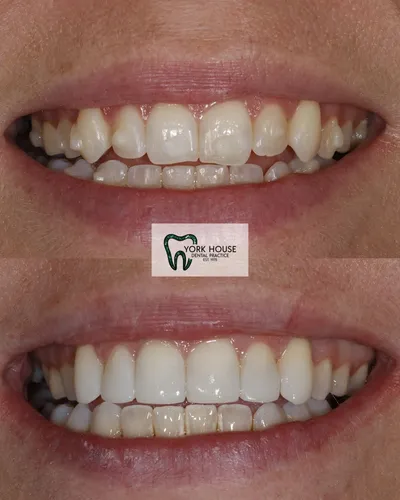
Many UK adults and teenagers seek orthodontic treatment not only for aesthetic improvement but to support lifelong oral health. Misaligned teeth can contribute to uneven wear, difficulties in maintaining optimal oral hygiene, and increased risk of periodontal issues. At practices like York House Dental Practice in West Byfleet, Surrey, patients receive personalised guidance based on clinical assessment to achieve stable, functional results while prioritising enamel preservation and bite stability.
This evidence-based guide compares Invisalign clear aligners with traditional fixed braces, drawing on clinical studies and UK orthodontic best practices. It aims to help patients and health professionals understand the mechanics, suitability, and long-term implications of each approach.
Understanding the Two Main Orthodontic Approaches
Traditional Fixed Braces
Fixed braces consist of metal or ceramic brackets bonded to the teeth, connected by archwires. They apply continuous, controlled pressure to guide teeth into optimal positions. Brackets and wires allow precise three-dimensional control, making them highly effective for complex movements including rotations, vertical adjustments, and significant bite corrections.
- Enamel considerations: Bonding requires careful etching, but modern techniques minimise impact on enamel surface integrity.
- Control: Excellent for severe crowding, rotations, and malocclusions.
- Compliance: Fixed nature ensures 24/7 force application without reliance on patient removal.
Invisalign Clear Aligners
Invisalign uses a series of custom-made, nearly invisible removable aligners crafted from medical-grade plastic. Each aligner is worn for 1–2 weeks before progressing to the next, gradually shifting teeth. Advanced digital planning with iTero scanning enables precise staging of movements.
- Comfort and aesthetics: Removable for eating, drinking, and cleaning; virtually invisible.
- Hygiene: Easier access for brushing and flossing, supporting better gingival health during treatment.
- Suitability: Highly effective for mild to moderate cases; modern systems can address a wide range of issues, though complex cases may require attachments or hybrid approaches.
Key Comparison: Effectiveness, Duration, and Patient Experience
| Factor | Traditional Braces | Invisalign Clear Aligners |
| Effectiveness | ~90% success in appropriate cases; superior for complex movements and severe malocclusions | ~88% for mild-moderate cases; comparable in suitable patients with high compliance |
| Average Treatment Time | 18–24 months (longer for complex cases) | 6–18 months for many cases |
| Comfort | Initial discomfort from brackets/wires; possible irritation | Generally smoother; removable for relief |
| Oral Hygiene | More challenging around brackets | Easier due to removability |
| Aesthetics | Visible (ceramic options less so) | Nearly invisible |
| Cost (Private UK, approximate) | £1,500 – £4,500 | £1,900 – £4,800 |
Data reflects aggregated findings from clinical reviews and UK practice experiences. Individual outcomes vary based on case complexity and patient factors.
Long-Term Outcomes and Orthodontic Relapse Prevention
Both treatments can deliver excellent alignment and occlusal stability when followed by proper retention. Orthodontic relapse—the tendency for teeth to shift back toward their original positions—remains a key consideration across all orthodontic modalities. Factors include gingival fibre reorganisation, continued facial growth changes into adulthood, and parafunctional habits.
The British Orthodontic Society (BOS) emphasises lifelong retention strategies for optimal stability. Patients typically wear retainers full-time initially, transitioning to nights-only, with many benefiting from fixed lingual retainers on lower anterior teeth combined with removable upper retainers.
Key Takeaways for Long-Term Success
- Retention is not optional: Lifelong part-time retainer wear is widely recommended to minimise relapse.
- Regular dental reviews support enamel preservation and early intervention for any minor shifts.
- Compliance with aligner wear (22+ hours/day) is critical for Invisalign outcomes matching fixed appliance predictability.
- Combined fixed-removable retention protocols often provide the best protection against unwanted tooth movement.
- Post-treatment monitoring by an experienced restorative team helps maintain gingival margins and overall oral health.
Clinical Insights from Experienced UK Practitioners
According to the clinical team at York House Dental Practice, thorough initial assessment using digital scanning and radiographic evaluation is essential to determine whether Invisalign, traditional braces, or a hybrid approach will best serve the patient’s anatomical needs and lifestyle. The restorative team at York House Dental Practice routinely integrates orthodontic planning with long-term restorative considerations, ensuring that alignment supports future enamel preservation and functional occlusion.
This multidisciplinary perspective helps patients achieve not just straighter teeth but smiles that remain healthy and stable for decades.
Who Should Consider Each Option?
Ideal Candidates for Traditional Braces
- Patients with severe crowding, significant rotations, or complex bite discrepancies.
- Younger patients where compliance with removable appliances may be inconsistent.
- Cases requiring precise root torque or vertical control.
Ideal Candidates for Invisalign
- Adults and teens prioritising discretion and flexibility.
- Patients with good compliance and mild to moderate alignment needs.
- Those seeking easier maintenance of oral hygiene during treatment.
Conclusion: Personalised Care for Enduring Results
Both Invisalign and traditional braces are proven orthodontic solutions capable of transforming smiles and supporting better long-term oral health. The choice depends on individual clinical needs, lifestyle preferences, and commitment to retention protocols. With proper planning, expert delivery, and diligent post-treatment care, patients can enjoy stable alignment, protected enamel, healthy gingival margins, and improved confidence for years to come.
At York House Dental Practice, the focus remains on evidence-based, patient-centred orthodontics delivered with clinical precision and genuine care. For personalised advice, a comprehensive consultation with an experienced clinician is the recommended first step toward achieving and maintaining your healthiest smile.
Last reviewed: July 2026. This article is for informational purposes and does not replace professional clinical advice. Always consult a GDC-registered dental professional.
“`
