
If you’ve come across the term trilobite and wondered what it means, you’re in the right place. This blog article will guide you through the Trilobite Meaning, covering everything from its scientific definition to its spiritual significance, and even some fun slang origins. Whether you’re a fossil enthusiast, a curious learner, or someone interested in cultural meanings, this comprehensive article will provide clarity in simple, user-friendly language.
What Is a Trilobite? — The Basic Definition
To start with, the definition of trilobite is fairly straightforward in a scientific context. A trilobite is an extinct marine arthropod that lived hundreds of millions of years ago during the Paleozoic Era. They thrived for around 270 million years, appearing first in the early Cambrian Period and disappearing by the end of the Permian Period.
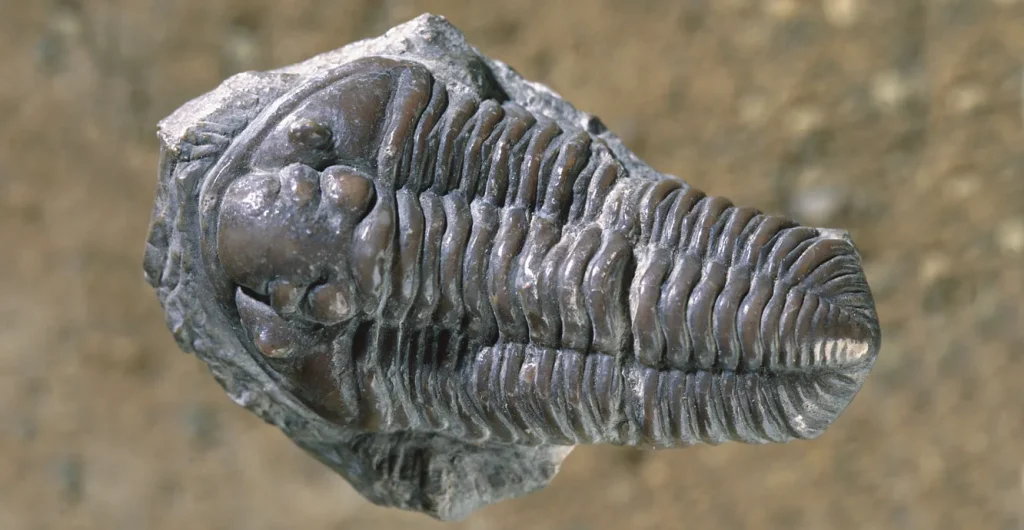
These creatures had hard exoskeletons segmented into three lobes — hence the name “tri-lobite.” The word itself comes from Latin roots: “tri” meaning three and “lobus” meaning lobe or segment. This physical segmentation gave trilobites a unique, recognizable body shape that has fascinated paleontologists for centuries.
What Does Trilobite Mean Scientifically?
In terms of the meaning of trilobite in scientific taxonomy, trilobites belong to the class Trilobita. They are part of the larger phylum Arthropoda, which includes modern-day insects, spiders, and crustaceans.
Trilobites are characterized by their three-part body plan:
-
Cephalon (head)
-
Thorax (body segments)
-
Pygidium (tail)
This segmentation was vital for their movement and protection, as their exoskeletons could molt and grow over time. The trilobite definition in scientific literature refers to these creatures as some of the earliest complex life forms with compound eyes and intricate body structures.
The Meaning of Trilobite Beyond Science
Trilobite Meaning in Spiritual and Symbolic Contexts
Beyond paleontology, the meaning of trilobite takes on a more symbolic or spiritual dimension. In many metaphysical and spiritual circles, trilobites are seen as symbols of evolution, endurance, and transformation. Their long existence on Earth — surviving multiple mass extinctions before finally vanishing — represents resilience and the continuous cycle of life and death.
Some spiritual interpretations suggest that the trilobite symbolizes ancient wisdom and connection to Earth’s deep history. Meditating or visualizing a trilobite fossil may inspire thoughts about personal growth, adaptability, and the importance of learning from the past.
Trilobite Meaning Slang and Its Origin
Interestingly, the term trilobite meaning slang has emerged in some casual conversations, especially online or in niche communities. Slang usage of “trilobite” sometimes refers humorously to someone who seems “ancient” or “old-fashioned,” much like the fossil itself.
Trilobite Meaning Slang Origin
This slang probably originated from comparing a person’s outdated style, habits, or technology use to something ancient or fossilized — i.e., a trilobite. For example, if someone uses a flip phone in 2025, their friends might jokingly call them a “trilobite” to highlight their old-school vibe.
Trilobite Meaning in Hindi
For those curious about the trilobite meaning in Hindi, the word is often translated as “त्रिलोबाइट” (Trilobite) directly, because it is a scientific term. However, the concept can be explained as:
एक प्राचीन समुद्री जीव जिसकी कठोर कंकाल तीन भागों में विभाजित होता था।
This means “an ancient marine creature with a hard exoskeleton divided into three parts.” The meaning of trilobite in Hindi preserves the scientific essence but may be used more in educational or paleontological contexts.
Why Are Trilobites Important?
Understanding the meaning of trilobite extends to why these fossils are so significant today.
-
Evolutionary Milestones: Trilobites are among the earliest known creatures with complex eyes and jointed limbs. Their fossils help scientists understand the evolution of life on Earth.
-
Geological Markers: Trilobites are used by geologists as index fossils. Because they evolved rapidly and had many species, their presence in rock layers helps date those layers accurately.
-
Cultural and Scientific Value: Beyond their scientific value, trilobite fossils have cultural importance and are often collected by enthusiasts and museums worldwide.
How Do Trilobites Relate to Modern Life?
While trilobites themselves vanished millions of years ago, their meaning and legacy persist in modern science and culture. They remind us of the vast timelines of Earth’s history and the continuous process of change.
-
In Education: Trilobites are a favorite subject in teaching evolutionary biology and paleontology.
-
In Art and Jewelry: Their distinctive shapes inspire artistic designs and jewelry, symbolizing antiquity and endurance.
-
In Popular Culture: Trilobites occasionally appear in sci-fi and fantasy media, often representing ancient or alien life forms.
🌍 Read Also: Hubris Meaning
Summary: Understanding Trilobite Meaning in Various Contexts
-
Scientific Definition: An extinct marine arthropod with a three-lobed body.
-
Spiritual Meaning: A symbol of resilience, evolution, and ancient wisdom.
-
Slang Usage: A humorous term for something or someone old-fashioned.
-
Hindi Meaning: त्रिलोबाइट, an ancient marine creature with a segmented exoskeleton.
Disclaimer: This article is for informational purposes only. Interpretations of trilobite meanings, especially spiritual or slang, may vary. For professional advice, please consult experts.
Frequently Asked Questions (FAQs)
1. What does trilobite mean in simple terms?
A trilobite is an ancient marine animal with a segmented body that lived hundreds of millions of years ago. It’s known for its hard exoskeleton and three distinct body parts.
2. Why are trilobites important to scientists?
Trilobites are important because their fossils help scientists understand early animal evolution and date geological rock layers due to their rapid species changes over time.
3. What is the spiritual meaning of a trilobite?
Spiritually, trilobites symbolize endurance, transformation, and ancient wisdom, reminding us of life’s long history and the power of adaptation.