
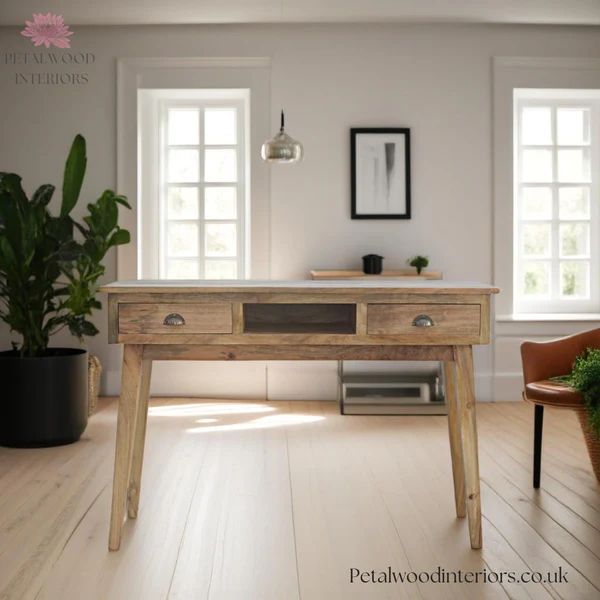
What makes a desk right for a stylish home office
The best desk for a stylish home office balances proportions, storage, and material quality so the piece supports daily work without making the room feel overly corporate. A desk should feel intentional within the space, not just functional.
That usually means looking beyond trend-led shapes and focusing on how the desk will live in the room every day. A large pedestal desk can feel impressive, but it may overwhelm a smaller spare bedroom. A slim writing desk can look elegant, but it may not suit someone working with multiple screens, files, and chargers. If you are comparing different layouts and finishes, browsing a wider range of home office furniture collections is often the easiest way to judge what feels proportionate and visually right.
For background on how desks evolved into the many forms we see today, the history of the desk as a furniture type is useful because it explains why some designs prioritise storage while others prioritise elegance and footprint.
Which desk style works best in a home office
The best desk style depends on how you work, how much space you have, and whether the desk needs to blend into a bedroom, living area, or dedicated office. Style should always follow use, even in a design-led room.
Writing desks work well in smaller or more decorative spaces because they have a lighter footprint and a cleaner silhouette. Storage desks and partner desks suit people who need paperwork close to hand, while standing desks suit more task-heavy work where movement through the day matters. The key is matching the desk to the rhythm of the room rather than forcing a bulky workstation into a space designed to feel calm and domestic.
A stylish home office usually benefits from one of three approaches:
- A slim writing desk for light laptop work and a cleaner visual look
- A storage desk for paperwork, chargers, and day-to-day organisation
- A larger statement desk for rooms with enough space to support it properly
What materials look best for a home office desk
The best materials for a home office desk are usually solid wood, quality veneer, or wood paired with metal, because these finishes offer both visual warmth and enough durability for everyday use. Material choice shapes the mood of the whole room.
Wood remains the strongest option if you want the office to feel like part of the home rather than an extension of a commercial workplace. Oak, walnut, and darker stained finishes tend to feel more grounded and timeless, while pale woods create a lighter Scandinavian effect. Metal can sharpen the silhouette, but too much of it can make the room feel colder than intended.
If the goal is a desk that feels connected to the wider interior rather than isolated from it, exploring the broader Petalwood Interiors collection can help you align the desk with the rest of the furniture and finish palette in the home.
How do you choose the right desk size for your room
The right desk size leaves enough room to work comfortably while preserving clear walkways, visual balance, and enough negative space for the room to feel settled. A desk that technically fits can still feel too large.
This is where many home office setups go wrong. People measure wall width but forget chair clearance, drawer access, and how far the desk projects into the room. In tighter spaces, a compact desk often looks more expensive simply because it suits the architecture better. In larger rooms, a desk that is too small can look lost and temporary.
As a general rule, smaller rooms benefit from desks with open legs or slimmer frames because they allow more of the floor area to remain visible. That one detail often makes the whole room feel larger.
What storage features are worth having in a stylish desk
The best storage features are the ones that support your daily routine without turning the desk into a bulky block of cabinetry. Good desk storage should reduce clutter, not dominate the design.
For most people, one or two drawers are enough for stationery, chargers, and notebooks. If you work with documents every day, deeper drawers or nearby storage become more important. Open shelving can look attractive, but it only works if you keep it tidy. Closed drawers usually create a calmer visual result, especially in multi-use rooms.
The most stylish desks tend to hide more than they show. That is part of why they feel composed in the room rather than busy.
How can you make a desk look stylish as well as practical
A desk looks stylish when its proportions, finish, and surrounding accessories all feel coherent, while still leaving enough open surface area for real work. Style comes from restraint as much as selection.
The desk itself does most of the heavy lifting, so you do not need to over-style it. A good lamp, one tray, and perhaps a small plant or framed print nearby is often enough. Once the desk starts carrying too many decorative objects, it stops reading as a workspace and starts feeling staged.
Practicality matters here too. Cable mess, oversized office equipment, and overflowing stationery trays can undermine even the most beautiful desk. The most successful home offices feel edited, not overdesigned.
Expert Insights
The best desk for a stylish home office is the one that matches the scale of the room, the way you actually work, and the mood you want the space to hold.
Writing desks tend to suit decorative and compact rooms best, while storage desks and larger office desks are stronger choices for heavier daily workloads.
Material choice has an outsized effect on the final result, with wood and wood-led finishes usually creating the warmest and most timeless home office look.
