

The term polycule has quickly become one of the most searched relationship-related words online and for good reason. Modern conversations about identity, emotional connection, and relationship structure are evolving, and people want a simple, accurate way to describe how individuals link together within polyamorous networks. That’s where the polycule definition comes in. It captures the entire relationship web, from direct partners to metamours and the broader community that forms around them.
A Grammatical Overview: Polycule Definition
Polycule Meaning
A polycule is a network of people connected through romantic or emotional relationships within a polyamorous structure. It shows how partners, metamours, and extended relationship connections link together.
Part of Speech:
Noun
Phonetic Spelling:
pol·y·cule
IPA:
/ˈpɒl.i.kjuːl/
Polycule Chart Simple Breakdown:
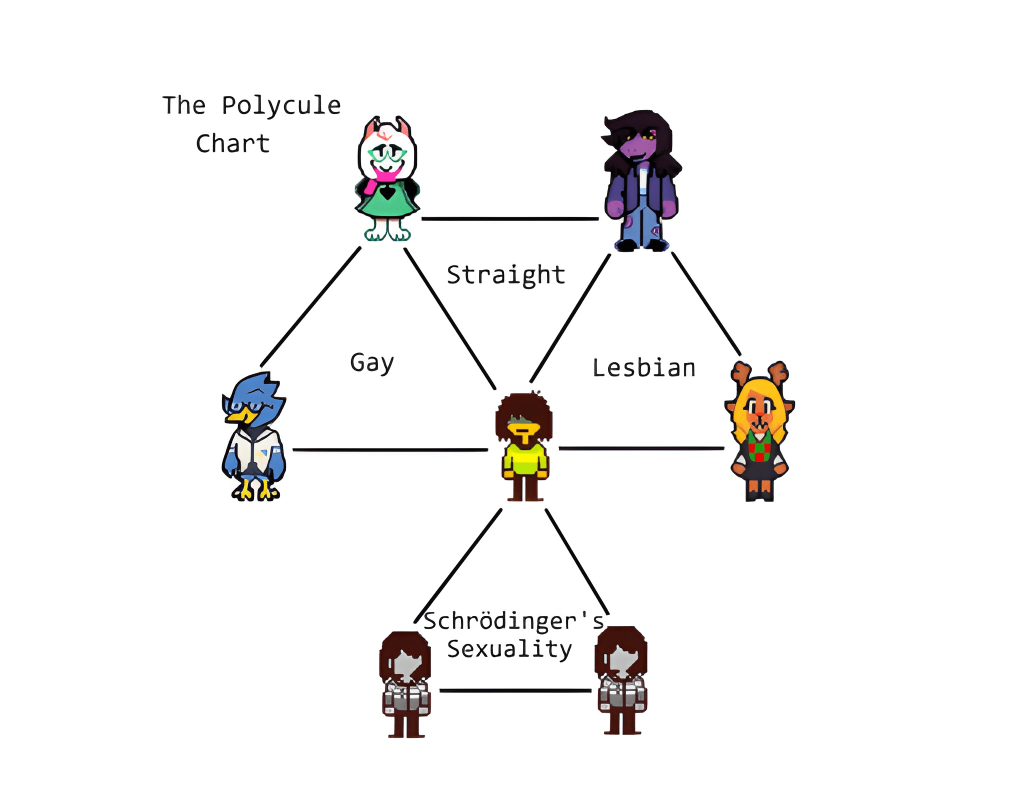
A polycule functions like a molecule: each person is a “node,” and each relationship is a “bond.” Draw those connections on paper, and you get a polycule chart — the visual map of the network.
Origin & Etymology
The word combines:
-
poly- (“many”)
-
-cule (from molecule, symbolizing linked parts)
It began gaining traction in online polyamory communities in the early 2000s. As language evolved to describe non-traditional relationship structures, “polycule” became the preferred metaphor because it’s flexible, visually intuitive, and easy to apply across different relationship styles and orientations.
Today, it appears in pop culture jokes, academic discussions on relationships, crossword puzzles, queer social circles, and even sitcom humor referencing a Nick Cannon polycule.
Detailed Usage & Contextual Meanings
A polycule can describe many types of networks. Here are key contexts:
1. Core Relationship Network
The direct and indirect romantic connections between people in a polyamorous arrangement.
2. The Greater Polycule
The extended structure, including:
-
partners
-
metamours (partners of partners)
-
metamours’ partners
-
sometimes family or co-parents
This wider network is often called the greater polycule.
3. Style-Based Structures
Different polycules operate differently:
-
Kitchen table polycule — everyone is comfortable enough to interact together casually.
-
KTP style polycule — same idea, emphasizing transparency and comfort.
-
Parallel polycule — partners do not all interact socially.
-
Transbian kitchen table polycule — a humorous, community-specific reference among queer groups.
4. Regional and Cultural Labels
Used jokingly or culturally:
-
Portland polycule — a meme associated with the city’s alternative relationship culture.
-
Seattle polycule — similar vibe, referencing tech-centric or queer communities.
5. Pop-Culture & Internet Usage
The phrase “Nick Cannon polycule” appears online as humorous commentary about widely known family structures.
6. Crossword & Puzzle Usage
The term appears in clues like member of a polycule crossword, usually pointing to words like metamour.
Grammar Notes & Collocations (Improved Clarity)
Common Collocations:
-
“healthy polycule relationship”
-
“part of a polycule network”
-
“mapping the polycule chart”
-
“joining the greater polycule”
-
“kitchen table polycule dynamics”
-
“active member of a polycule”
-
“polycule vs polyamory discussion”
Countability:
-
Singular: a polycule
-
Plural: polycules
Tone & Register:
Informal to semi-formal. Suitable for social, academic, or identity-focused writing but not legal or corporate communication.
Polycule Synonyms
| Term | Meaning |
|---|---|
| Network | Interconnected group of people |
| Relationship web | Informal map of romantic or emotional links |
| Constellation | Group of relationships in non-monogamy contexts |
| Structure | Organized relationship arrangement |
Polycule Antonyms
| Term | Meaning |
|---|---|
| Dyad | A two-person relationship only |
| Monogamy | Exclusive partnership between two individuals |
“Looks Like” Words (Shape or Sound Similarity)
-
molecule
-
corpuscle
-
cluster
-
constellation
-
node
-
polyamory
-
polyculture
Read Also: Philophobia Meaning
Example Sentences
-
Their polycule includes partners, metamours, and supportive connections who meet regularly.
-
She used a polycule chart to explain how everyone in the house shared responsibilities.
-
The kitchen table polycule dynamic helped create a warm, cooperative environment.
-
Their friend group jokingly referred to themselves as a “Portland polycule” because of overlapping relationships.
-
The greater polycule plans an annual retreat focused on communication and boundaries.
-
“Metamour” was the answer to the member of a polycule crossword clue she couldn’t solve earlier.
-
Online posts compared his family tree to a “Nick Cannon polycule,” emphasizing its complexity.
Common Mistakes & Tips
❌ Mistake 1: Using “polycule” as a synonym for polyamory
Tip: Polyamory is the practice; a polycule is the network created by that practice.
❌ Mistake 2: Assuming all polycules look identical
Some are close-knit like a KTP style polycule; others are fully parallel.
❌ Mistake 3: Thinking everyone must date everyone
A polycule includes all emotional or romantic connections — not necessarily direct relationships.
❌ Mistake 4: Limiting the word to dating
It also appears in media culture, queer humor, blogs, and relationship education.
Cultural & Contextual Insight
The polycule definition reflects broader cultural shifts around relationships. As people explore diverse ways of forming bonds, language adapts. The term appears in:
-
queer and LGBTQ+ social spaces
-
polyamory education circles
-
metropolitan dating cultures (e.g., Seattle polycule, Portland polycule)
-
webcomics and relationship blogs
-
academic conversations about non-monogamy
-
internet memes referencing celebrity family structures
The rise of relationship mapping apps and diagram trends has also made the polycule chart a visually satisfying and informative tool.
Tips to Remember the Word
-
Associate polycule with molecule — multiple nodes, multiple connections.
-
Picture a relationship map: that’s your polycule.
-
If you think of overlapping friend groups, that’s similar to how a greater polycule forms.
-
Emotionally supportive circles? That’s often a kitchen table polycule in practice.
Related Words / Word Families
-
polyamory
-
metamour
-
relationship constellation
-
open relationship
-
partner network
-
ethical non-monogamy
Reader Interaction / Social Hook
Have you ever looked at your friend group, dating network, or chosen family and realized how connected everyone is?
That interconnectd web is exactly what the polycule definition describes — a modern lens on how humans naturally form networks of care.
Related Expressions / Slang Evolution
-
partner web
-
love network
-
relationship constellation
-
metamour chain
-
poly-nest (informal, rare)
Conclusion
Understanding the polycule definition gives you a confident grasp of how modern relationship networks are described in today’s vocabulary. Whether it’s a close-knit kitchen table polycule, an extended greater polycule, or a culturally referenced structure like the Seattle polycule, the term highlights connection, communication, and community. With its clear metaphor and growing usage, polycule has become an essential word in the language of contemporary relationships. Now, you can use it naturally and accurately whenever discussing how people connect within polyamorous or emotionally supportive networks.
? FAQ Section About Polycule Definition
1. What is a polycule
A polycule is a network of connected polyamorous relationships.
2. Does a polycule require polyamory?
Yes, the term is rooted in polyamorous contexts, though some use it metaphorically for deeply interconnected networks.
3. Polycule vs Polyamory — what’s the difference?
Polyamory = practice
Polycule = the network created by that practice
4. Can a polycule be hierarchical?
It depends. Some are hierarchical; others follow non-hierarchical or cooperative models like a kitchen table polycule.
5. Can monogamous people be part of a polycule?
Yes — if they are connected to someone who has other partners, they become part of the greater polycule.
6. Is the word “polycule” formal?
It is mostly informal, though occasionally used in academic discussions about relationship structures.
